
How Connected Ball Technology Works in FIFA World Cup 2026 Official Football: Inside the Smart adidas TRIONDA Ball
Release Date: October 2025
Football has always been a game of emotions, skills, and split-second decisions. A small touch, a quick pass, or a few centimeters can change the result of a match. In the FIFA World Cup 2026, technology is becoming an even bigger part of those moments with the new official match ball featuring advanced Connected Ball Technology.
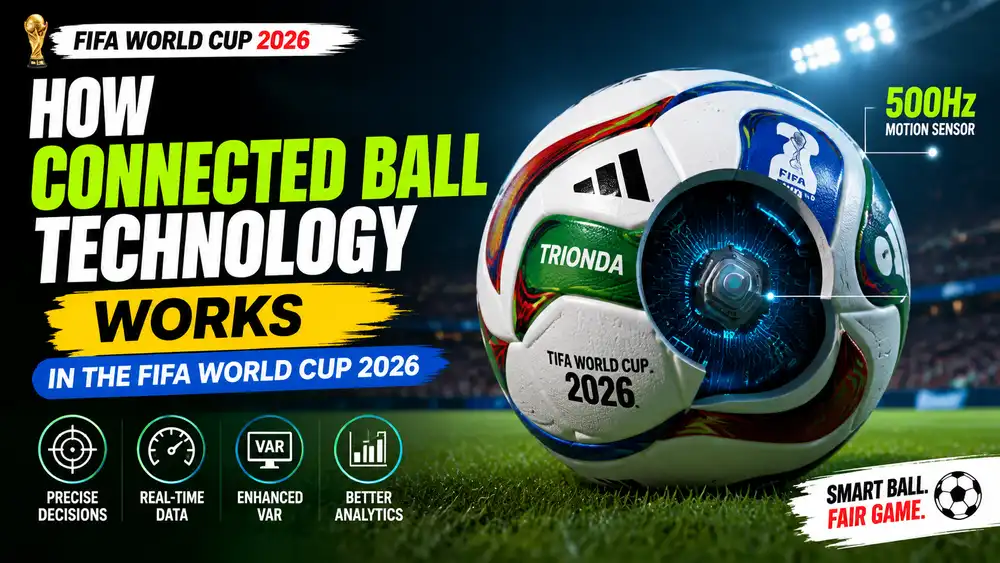
The 2026 FIFA World Cup official football, adidas TRIONDA, brings a new level of smart football technology. It is designed to help referees and match officials make faster and more accurate decisions without changing the natural feeling of the game.
When I first heard about a football carrying a built-in sensor, it sounded like something from a video game. But after understanding how the system works, it became clear that this technology is not about replacing human judgment. It is about giving referees better information when every second matters.
The idea is simple. The ball plays like a normal football, but inside it works like a small smart device.
What Is Connected Ball Technology?
Connected Ball Technology is a smart system built inside the FIFA World Cup official football. It uses a small motion sensor placed inside the ball to collect real-time movement data during matches.
The sensor tracks important information such as:
- Ball movement
- Speed changes
- Direction
- Touch points
- Contact time with players
This data is sent to match officials through a secure connection. It helps referees understand exactly what happened during difficult situations.
For example, when a player touches the ball during a possible offside situation, the system can identify the exact moment of contact. This allows Video Assistant Referee (VAR) teams to review incidents more quickly.
How Connected Ball Technology Works During a Match
A Small Sensor Inside a Football
The most interesting part of this technology is hidden inside the ball.
The adidas TRIONDA uses a high-speed motion sensor that works hundreds of times every second. The sensor collects movement data without affecting the balance, weight, or performance of the football.
Players do not feel any difference when kicking, passing, or shooting the ball.
This is important because footballers are very sensitive about equipment. A tiny change in weight or balance can affect their performance.
Real-Time Data Collection
During a match, the sensor continuously records the ball’s movement.
Imagine a midfielder making a fast through pass. The system can detect:
- The exact passing moment
- The direction of the ball
- The speed of the movement
- The player’s contact with the ball
This information helps VAR officials review situations that happen too quickly for the human eye.
A referee might spend several minutes checking a decision. With connected ball data, some decisions can become faster and clearer.
Working Together With VAR
Connected Ball Technology does not replace VAR.
Instead, it works alongside the existing video review system.
VAR mainly depends on camera angles and referee decisions. Cameras show what happened visually, while the connected ball provides additional movement information.
Together, they create a more complete picture.
For example, in a close offside situation, cameras can track player positions while the ball sensor can identify the exact kick moment. Both pieces of information help officials make a final decision.
Key Features of the FIFA World Cup 2026 Connected Football
500Hz Motion Sensor Technology
The heart of the smart football is its advanced motion sensor.
The sensor can capture movement data at extremely high speed, allowing officials to analyze moments that happen within fractions of a second.
This is especially useful in modern football, where players move faster than ever.
Improved Offside Decisions
Offside decisions are among the most debated moments in football.
A player’s shoulder, foot, or body position can decide whether a goal stands or not.
Connected Ball Technology helps by providing accurate information about when the ball was played.
This reduces guesswork and makes the review process more reliable.
Better Match Analysis
The technology is not only useful for referees.
Coaches and analysts can benefit from detailed match data.
They can study:
- Passing patterns
- Ball speed
- Team movement
- Playing style
In the future, this type of information may become valuable for professional training and tactical planning.
Designed Without Changing Football Experience
One concern many fans had was whether technology would make football feel artificial.
The good news is that the connected football is still a normal football.
Players still need skill, control, creativity, and teamwork.
The sensor simply works quietly in the background.
My Experience and Thoughts About Smart Football Technology
Technology Should Support Football, Not Control It
I have watched many football matches where one small decision created huge discussions after the final whistle.
Sometimes fans celebrate a goal, and minutes later, the goal is cancelled because of a tiny offside decision.
Technology like Connected Ball can reduce those frustrating moments.
But I believe football should always keep its human side. The emotion of scoring a goal, the reaction of fans, and the decisions made by referees are what make the sport special.
Technology should be a helpful assistant, not the main character.
A Small Change With a Big Impact
The interesting thing about this football is that fans watching from the stadium may not notice anything different.
There is no big screen on the ball. There are no visible electronic parts.
It looks like a traditional football.
But inside, it is collecting thousands of pieces of information every second.
That is what makes this technology impressive.
Challenges of Connected Ball Technology
Keeping Football Simple
Football has always been loved because anyone can understand it.
Adding too much technology could make the game confusing for casual fans.
Officials need to use this technology carefully and explain decisions clearly.
Technology Dependence
Another concern is depending too much on machines.
Sensors and software can provide information, but football still requires human judgment.
A referee’s experience and understanding of the game remain important.
Cost and Accessibility
Smart football technology is expensive and requires advanced infrastructure.
While it works well in major tournaments like the FIFA World Cup, smaller leagues may not have access to the same systems.
The Future of Football Technology
More Smart Equipment Coming Soon
Connected Ball Technology may be only the beginning.
Future football equipment could include:
- Smart boots
- Advanced player tracking systems
- Better injury monitoring tools
- More detailed performance analysis
Football is slowly becoming a combination of tradition and technology.
A New Era for Match Decisions
The biggest benefit of smart football technology is fairness.
Players train for years to compete at the highest level. A wrong decision in an important match can change their entire journey.
Better technology can help protect those moments.
Final Thoughts on the FIFA World Cup 2026 Connected Ball
The FIFA World Cup 2026 official football shows how technology can improve football without taking away its beauty.
Connected Ball Technology is a smart solution for one of the fastest sports in the world. It helps referees make better decisions, supports VAR, and brings more accuracy to important moments.
For me, the best part is that the technology stays invisible. Fans can still enjoy the same football they love, while officials get better tools behind the scenes.
The future of football will not be only about faster players or stronger teams. It will also be about smarter systems working quietly to make the game fairer.
The ball may look the same from the outside, but inside, it represents a new chapter in football history.
Redmi Pad 2 : A Budget Tablet That Feels Surprisingly Premium
Samsung Galaxy Book6 Ultra : A Powerful AI Laptop Built for Creators and Professionals
OnePlus 15 : A Flagship That Pushes Battery Life and Performance to a New Level
Xiaomi Smart Band 10 Pro Review: A Smart Fitness Band That Feels Closer to a Smartwatch
Lenovo Yoga Pro 7i Gen 11 Aura Edition (15-Inch) : A Premium Laptop Built for Serious Creators


